Water is one of the most destructive forces a home can face. They come from the slow, persistent accumulation of poorly managed drainage that quietly undermines foundations, saturates soil, supports mold growth, and erodes landscaping over months and years. Taking deliberate steps to improve drainage is one of the most protective investments a homeowner can make, and understanding how water moves across your property is the starting point for doing it effectively.
Understanding Your Property Before You Improve Drainage
Every property has a unique drainage pattern, how water moves across the surface, where it collects, and where it flows after rainfall. Before making any changes, observe your property during and after a significant rain event. Where does water pool? How long does it linger? Does it flow toward the house or away from it? Are there areas that stay soggy for days after rainfall? This observation is more valuable than any contractor consultation because it tells you exactly what your property needs. Drainage problems that appear similar on the surface often have entirely different underlying causes.
Grading and Surface Solutions to Improve Drainage
Surface grading is the foundational drainage element that every other solution builds upon. Water follows gravity, and if the ground around your foundation slopes toward the house, every rain event works against you. The ideal grade drops approximately six inches over the first ten feet from the foundation, enough to reliably redirect water before it reaches the structure. Correcting negative grading involves adding and compacting soil to establish the right slope. This is often the most impactful single improvement available for homes with chronic foundation moisture and addresses the problem at its source rather than managing water after it has already arrived.
Beyond grading, surface swales redirect water flow across larger yard areas and guide runoff toward appropriate drainage destinations. Strategically placed swales can manage significant volumes of surface water without any mechanical components, making them one of the most low-maintenance drainage improvements available.
Subsurface Systems That Improve Drainage Effectively
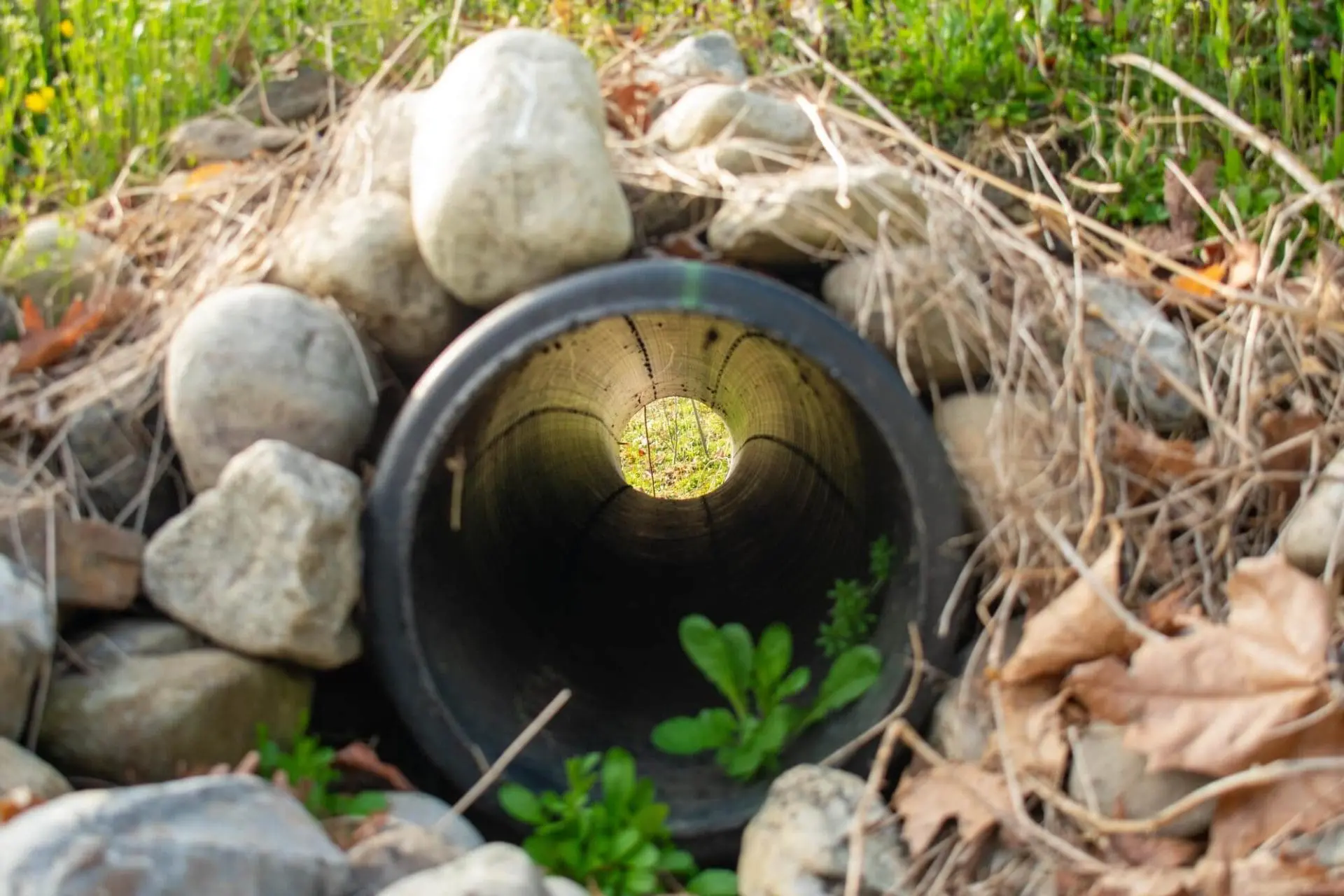
When surface solutions aren’t sufficient, subsurface drainage systems provide the next level of intervention. French drains are the most widely used option: perforated pipes surrounded by gravel and wrapped in landscape fabric that capture water moving through the soil and redirect it to a safe discharge point. They’re particularly effective along fence lines, retaining walls, and building perimeters where lateral water movement is the primary concern.
Catch basins installed in low-lying areas capture surface runoff through a grated inlet and direct it through underground piping to a discharge location away from the home. Dry wells provide a destination for collected water, allowing it to slowly percolate into the surrounding soil at a safe distance from the foundation. Each of these solutions addresses different drainage scenarios, and identifying which applies to your property determines which investment makes the most sense.
ILandscaping and Ongoing Maintenance
Landscaping choices have a more significant influence on drainage than most homeowners appreciate. Native plants with deep root systems improve soil permeability over time, allowing water to infiltrate more readily. Rain gardens, planted depressions designed to capture and filter runoff from downspouts or driveways, are an increasingly popular functional drainage solution that also creates an attractive habitat for pollinators.
Replacing solid concrete driveways, patios, and walkways with permeable alternatives allows water to infiltrate the ground where it falls rather than routing it toward the foundation or neighboring properties. These landscaping choices work cumulatively and become increasingly effective as plants establish and root systems develop.
Regular maintenance keeps drainage systems functioning as designed. Gutters and downspouts should be cleared at least twice annually. Catch basin grates should be checked after significant storms for debris blockage. French drain systems should be flushed periodically and inspected every few years for sediment accumulation. Consistent maintenance of existing systems is almost always more cost-effective than installing new ones to compensate for neglected ones.
Frequently Asked Questions (FAQs)
How do I know if my property needs drainage improvement?
Standing water that persists for more than a few hours after rain, chronically wet soil, basement dampness, foundation cracks, and erosion channels in the lawn are all indicators.
What is the most cost-effective way to improve drainage?
Correcting surface grading around the foundation and ensuring gutters and downspouts are clean and directing water well away from the home are the most cost-effective first steps. These address the most common drainage failure points at minimal cost compared to subsurface drainage installations.
How does a French drain work, and when is one needed?
A French drain captures groundwater moving through the soil via a perforated pipe surrounded by gravel and redirects it to a safe discharge point. It’s most appropriate when surface grading solutions aren’t sufficient, typically in areas with heavy clay soil, high water tables, or chronic groundwater accumulation, regardless of surface conditions.
Can landscaping really make a meaningful difference in drainage?
Yes, significantly. Native plants with deep root systems improve soil permeability over time, rain gardens capture and filter runoff from impervious surfaces, and replacing solid concrete with permeable alternatives allows water to infiltrate rather than concentrate and flow toward the foundation.
How often should drainage systems be maintained?
Gutters and downspouts should be cleared at least twice a year. Catch basins should be checked after major storms. French drain systems should be flushed annually and inspected every three to five years for sediment accumulation.
PRIME Home Inspections offers home inspections to homebuyers and sellers in western Washington state. Contact us to schedule an appointment for our services.